

JC, a leading investment casting and CNC machining manufacturer, specializes in producing steel components with exceptional finishing standards. By integrating advanced CNC machining—such as high-speed machining, multi-axis milling, precision turning, grinding, and wire EDM—with investment casting, JC ensures each steel part meets strict dimensional and surface requirements. The company employs various post-machining finishing techniques like vibratory tumbling, shot peening, electropolishing, and passivation to enhance corrosion resistance, durability, and appearance. Rigorous quality control, including CMM inspection and non-destructive testing, guarantees defect-free products. JC’s investment in cutting-edge tooling, coolant optimization, and parameter fine-tuning enables superior surface finishes and tight tolerances for carbon steel, alloy steel, and stainless steel components. Serving industries like automotive, aerospace, and medical, JC stands out by offering in-house control from casting to finishing, custom solutions, and adherence to international standards. JC’s continuous innovation ensures it remains a top choice for clients seeking precision steel machining and finishing.
Renowned for quality and reliability, JC stands at the forefront of investment casting and CNC machining, delivering superior steel components to global industries. As a committed manufacturer, JC blends advanced CNC machining techniques with investment casting expertise, setting new standards of finishing, precision, and durability in steel parts manufacturing. This article provides an in-depth exploration of precision CNC machining techniques specifically tailored for steel, revealing how JC ensures outstanding surface finishes and exceptional part integrity.
Understanding Investment Casting and CNC Machining at JC
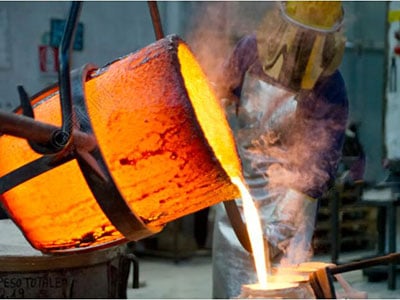
Investment Casting is the backbone of JC’s production process for complex steel components, providing high dimensional accuracy and excellent surface finish. However, to meet the most demanding engineering requirements, JC integrates CNC machining post-casting, enabling further refinement of critical dimensions and surface characteristics. This synergy between casting and machining ensures every steel component meets or exceeds client specifications, both visually and functionally.
The Importance of Superior Steel Finishing
Steel parts are integral to diverse sectors, from aerospace to automotive and energy. The finishing quality not only influences aesthetics but also the mechanical properties, longevity, and performance under stress. JC’s precision CNC machining ensures:
- Consistently smooth and defect-free surfaces
- Enhanced corrosion and wear resistance
- Precision in dimensional tolerances
- Optimal fit and function for assembly
- Greater reliability in critical applications
Key CNC Machining Techniques for Steel at JC
1. High-Speed Machining (HSM)
JC employs high-speed machining with advanced carbide tools and optimized cutting parameters to achieve rapid material removal while maintaining tight tolerances. HSM minimizes heat-affected zones, reducing the risk of micro-cracks or residual stresses common in conventional machining. This technique is particularly beneficial for stainless and tool steels processed at JC.
2. Multi-Axis CNC Milling
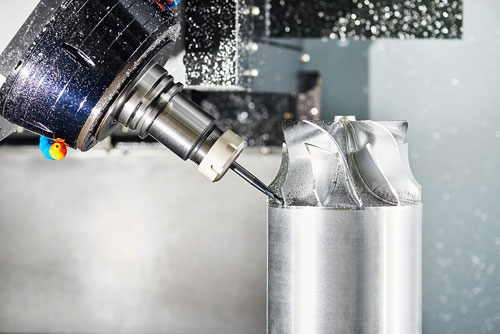
Utilizing 3, 4, and 5-axis CNC milling centers, JC can perform simultaneous cutting operations on complex steel geometries. Multi-axis machining reduces setup times and improves surface uniformity, especially on intricate or contoured surfaces, and eliminates the need for manual re-fixturing, thus boosting consistency and throughput.
3. Precision Turning and Grinding
For cylindrical steel components, CNC turning centers at JC deliver exceptional concentricity and surface smoothness. Post-turning, precision grinding achieves mirror-like finishes, critical for sealing surfaces or mating components. This two-step process ensures roundness and minimal surface roughness, often below Ra 0.2μm.
4. Wire EDM for Intricate Features
Wire Electrical Discharge Machining (EDM) enables JC to produce ultra-precise slots, holes, and contours on hardened steel parts. The non-contact process prevents tool-induced deformation and allows for the production of features with sub-millimeter accuracy, ideal for medical or aerospace components.
5. Advanced Toolpath Strategies
JC’s engineers use CAD/CAM software to generate optimized toolpaths that minimize tool wear and maximize surface quality. Adaptive clearing, trochoidal milling, and dynamic feed-rate control are employed to ensure even chip load, reduce vibrations, and avoid tool marks.
Steel Surface Finishing Techniques at JC
After CNC machining, JC applies several surface finishing processes tailored to each steel part’s application and service environment:
- Vibratory Tumbling: Removes burrs and smooths sharp edges post-machining.
- Shot Peening: Increases surface hardness and fatigue resistance.
- Electropolishing: Produces a bright, corrosion-resistant finish ideal for medical and food-grade steel components.
- Passivation: Eliminates free iron from the surface to prevent rust and improve corrosion resistance.
- Surface Coating: Application of protective coatings such as black oxide or zinc for enhanced durability.
Quality Control and Inspection at JC
JC’s commitment to quality is demonstrated by its rigorous inspection regime. Every CNC-machined steel part undergoes:
- Dimensional Verification: Using CMM (Coordinate Measuring Machines) for micron-level accuracy.
- Surface Roughness Testing: Profilometers quantify Ra values, ensuring finishing standards are met.
- Non-Destructive Testing (NDT): Dye penetrant, ultrasonic, and magnetic particle inspection for internal flaws.
Advanced statistical process control (SPC) techniques monitor production trends, allowing JC to maintain consistent quality and traceability from raw material to finished product.
Innovations Driving Superior Steel Finishing at JC
1. Tool Selection and Coating Technologies
JC invests in the latest tooling technologies, including PVD-coated carbide inserts and high-performance end mills designed for steel alloys. Tool coatings such as TiAlN and AlCrN offer increased resistance to heat and wear, ensuring a cleaner cut and improved as-machined surfaces.
2. Coolant and Lubrication Optimization
Proper coolant delivery is crucial for steel machining. JC utilizes high-pressure, precisely directed coolant streams to control temperature, evacuate chips, and prevent workpiece distortion. Specialized lubricants further reduce friction, contributing to superior surface finishes and extending tool life.
3. Machining Parameter Fine-Tuning
Through extensive R&D, JC has developed optimal machining parameters—feed rates, spindle speeds, depth of cut—for various steel grades. Continuous monitoring and adjustment ensure the best balance between productivity and surface integrity.
Case Studies: JC’s Commitment to Excellence
Automotive Powertrain Components
JC supplies precision-machined steel gears and shafts for automotive OEMs. By integrating investment casting with 5-axis CNC finishing and in-process inspection, JC delivers components with precise gear profiles, minimal runout, and superior wear characteristics, meeting or exceeding OEM specifications.
Aerospace Structural Fittings
For aerospace clients, JC manufactures high-strength steel fittings requiring not only tight tolerances but also flawless surface finishes to prevent crack initiation. Investment castings are CNC-machined, ground, and shot-peened, followed by 100% NDT, ensuring only the best parts reach the assembly line.
Medical Device Housings
JC’s expertise in electropolishing and passivation, combined with ultra-precision CNC milling, delivers stainless steel medical components that are biocompatible, easy to sterilize, and feature a lustrous, defect-free surface.
Why Choose JC for Precision CNC Machining and Investment Casting?
JC differentiates itself through technological innovation, deep industry knowledge, and an unwavering commitment to quality. As an integrated investment casting and machining manufacturer, JC offers:
- Complete in-house control from raw casting to final finishing
- Customizable machining and finishing solutions for any steel alloy
- Strict adherence to international quality standards (ISO, IATF, AS9100)
- Responsive engineering support and rapid prototyping
- Cost-efficient, scalable production for both small and large volumes
By continually investing in CNC and finishing technologies, JC ensures that every steel component meets the highest standards of performance, reliability, and appearance.
FAQs: Precision CNC Machining of Steel at JC
Which steel grades can JC machine with precision?
JC is equipped to machine a wide variety of steels, including carbon steel, alloy steel, tool steel, and all major grades of stainless steel (e.g., 304, 316, 17-4PH). Specialized tooling and process controls allow for consistent results across these materials.
What are JC’s typical surface finish capabilities for steel?
JC routinely achieves surface finishes as fine as Ra 0.2μm to 0.4μm on turned and ground steel parts, and can further enhance surfaces via electropolishing when needed for specialized applications.
How does JC ensure dimensional accuracy in steel machining?
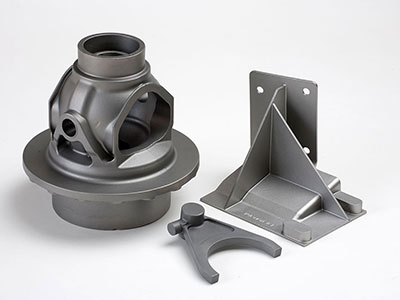
By leveraging advanced CNC machinery, real-time in-process measurement, and post-process CMM inspection, JC consistently holds tolerances down to ±0.005mm, even on complex or thin-walled structures.
Future Trends in Steel CNC Machining and Finishing at JC
JC is committed to staying ahead of industry trends by adopting:
- Automation and robotics in material handling and inspection
- Artificial intelligence-driven process optimization for reduced cycle times
- Eco-friendly finishing technologies for sustainability
- Expansion of additive manufacturing to complement casting and machining
These innovations will further enhance JC’s ability to deliver superior-finished steel parts for the most demanding applications worldwide.