
JC Casting is a China-based manufacturer of custom stainless steel clamps for industrial equipment and OEM projects. We provide investment casting, CNC machining, heat treatment, and surface finishing in one production program.
Our stainless steel clamps are made for pipe systems, architectural hardware, machinery, process equipment, and other engineered assemblies. We manufacture parts from customer drawings, 3D CAD files, samples, and technical specifications.
This page covers the main clamp types, stainless steel grades, manufacturing methods, finishing options, application industries, quality control, and OEM production process. If you already have a design, send it to our team for a manufacturing review and quotation.
Custom Stainless Steel Clamp Solutions
A stainless steel clamp is a functional component. Its design depends on what it must hold, where it will be installed, and what conditions it will face.A pipe clamp may need stable support and resistance to vibration. A glass clamp may need a clean surface and accurate mounting points. A machine clamp may need tight control of holes, threads, or locating surfaces.
For this reason, JC Casting focuses on custom stainless steel clamp manufacturing rather than a single standard design.
Our production route can be adjusted to the part geometry, material, quantity, tolerance, surface finish, and application.
Stainless Steel Clamp Product Types
Stainless Steel Pipe and Tube Clamps
Pipe and tube clamps secure cylindrical components in a fixed position. They are used in piping systems, industrial machinery, equipment supports, and mechanical assemblies.
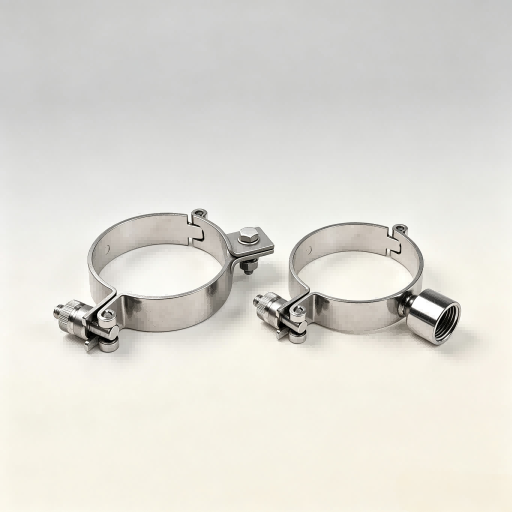
The clamp design can include:
- Mounting holes
- Threaded holes
- Bosses
- Ribs
- Locating features
- Custom mounting sections
The geometry can be designed around the pipe diameter and available installation space.
304 stainless steel is often suitable for general industrial environments. 316 stainless steel is a common option for marine, coastal, and chloride-rich conditions.
Material selection should always consider the actual service environment.
Stainless Steel Glass and Architectural Clamps
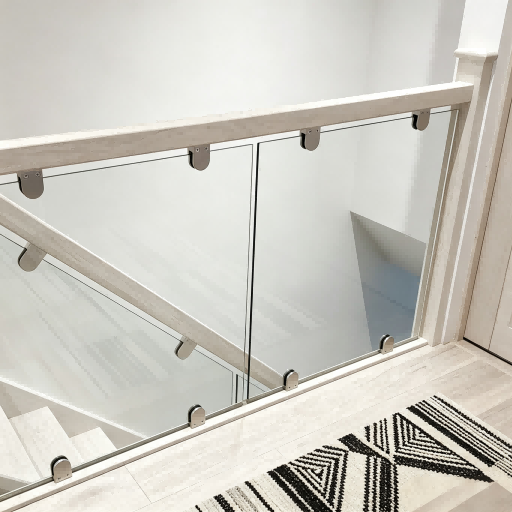
Glass clamps are commonly used in railings, balconies, stairs, partitions, and other architectural systems.These components have two requirements. They must perform mechanically, and they must look clean after installation.
Investment casting can produce curved profiles and compact shapes. CNC machining can control holes and mounting surfaces. Polishing or brushing can then provide the required appearance.
For visible hardware, mirror polishing can create a bright reflective surface. A brushed or satin finish gives a softer industrial appearance.
Stainless Steel Mechanical and Equipment Clamps
Mechanical clamps are designed to hold, locate, support, or connect components.
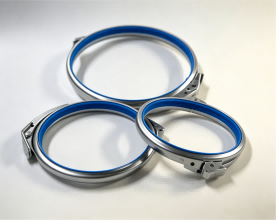
Many are made for one specific machine or assembly. The clamp may need to match a housing, frame, pipe, or other component.
Important design points can include:
- Dimensional accuracy
- Mounting position
- Thread quality
- Mechanical strength
- Vibration resistance
- Repeatability between production batches
Investment casting can produce the main geometry. CNC machining can then be used on the features that need tighter dimensional control.
Custom OEM Stainless Steel Clamps
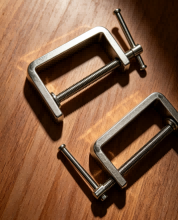
Standard clamps do not always fit an OEM assembly.
JC Casting can manufacture custom stainless steel clamps from 2D drawings, 3D CAD models, physical samples, or customer specifications.
Before production, our engineers can review the design for casting and machining.We check areas such as wall thickness, internal geometry, machining allowance, critical dimensions, and features that may be difficult to cast.
A good DFM review can reduce unnecessary machining and help avoid tooling changes.The target is not only to copy the drawing. It is to create a reliable manufacturing process for the required function.
Stainless Steel Clamp Material Selection
Choosing the material starts with the working environment.
Temperature, moisture, chemicals, chlorides, mechanical load, and cleaning conditions can all affect the correct grade.
304 Stainless Steel
304 stainless steel is a common material for general-purpose applications.
It offers a useful balance of corrosion resistance, strength, availability, and cost.It can be used for many industrial machines, architectural components, indoor equipment, and food-related systems.For stainless steel castings, the comparable austenitic casting grade is commonly designated CF8.When the operating environment is mild, 304 can often provide the required performance without the additional cost of a higher-alloy grade.
316 Stainless Steel
316 stainless steel is used when higher corrosion resistance is needed.
Its molybdenum content improves resistance to localized corrosion in many chloride-containing environments.
Common applications include:
- Marine equipment
- Coastal installations
- Water treatment
- Chemical equipment
- Food processing equipment
- Outdoor industrial systems
The common casting grade is CF8M.316 is not automatically the right choice for every project. If chloride or chemical exposure is low, 304 may be a more economical solution.
Duplex Stainless Steel
Duplex stainless steel can be selected when a clamp requires both high strength and strong corrosion resistance.
Duplex 2205 is a common grade for demanding industrial environments. It can be considered where chloride exposure and mechanical loading are important.Duplex alloys require controlled casting and heat treatment. They should therefore be selected according to the actual engineering specification rather than used as a general replacement for 304 or 316.
Investment Casting Process for Stainless Steel Clamps
Why Use Precision Investment Casting?
Clamp designs often contain shapes that are not economical to machine from solid material.Examples include curved sections, bosses, ribs, recessed areas, and complex external profiles.
Investment casting can reproduce much of this geometry close to the final shape. This reduces material removal and can lower machining requirements.The process is especially useful for repeated production of complex stainless steel components.It also gives designers more freedom than many conventional machining-only methods.
Stainless Steel Clamp Manufacturing Flow
A typical production route is:
Wax Pattern → Ceramic Shell → Dewaxing → Stainless Steel Pouring → Casting Removal → CNC Machining → Surface Finishing → Inspection
Each stage must be controlled to achieve consistent results.
Wax Pattern Production
The wax pattern represents the basic geometry of the final clamp.
Pattern accuracy is important because dimensional variation at this stage can carry through to the casting.
Ceramic Shell Building
The wax pattern is coated with ceramic slurry and refractory materials.
Several layers are normally applied to build a strong ceramic shell. The shell must withstand the temperature and pressure of molten stainless steel during pouring.
Dewaxing and Metal Pouring
The wax is removed from the ceramic shell.The selected stainless steel alloy is then melted and poured into the prepared mould.
Melting and pouring conditions must be controlled carefully. Poor control can contribute to defects such as incomplete filling, inclusions, or porosity.
Casting Cleaning and Finishing
After the metal solidifies, the ceramic shell is removed.
The castings are separated from the runner system, cleaned, and inspected.
Depending on the project, the parts may then receive heat treatment, CNC machining, polishing, passivation, or other finishing processes.
CNC Machining for Critical Clamp Features
Investment casting creates the main shape, but it does not mean every feature should be produced to the final machining tolerance.
For many stainless steel clamps, a combined casting and machining process is more practical.The casting can produce non-critical external surfaces. CNC machining can then control the features that affect assembly.
Typical machined features include:
- Precision mounting holes
- Threaded holes
- Bores
- Flat mounting faces
- Counterbores
- Locating surfaces
This approach has an important cost benefit.
Instead of machining the entire clamp from solid stainless steel, only the required functional areas are machined.
It can reduce machining time, material waste, and total production cost while maintaining the required fit and function.
For this reason, JC Casting recommends reviewing tolerances before tooling. Very tight tolerances should be used only where they are functionally necessary.
Stainless Steel Clamp Surface Finishing
Surface treatment should match the end use of the clamp.
An industrial machine part may only require basic cleaning. A visible architectural component may need a much higher cosmetic standard.
Mirror Polishing
Mirror polishing produces a bright and reflective stainless steel surface.
It is often selected for visible architectural hardware and products where appearance is a key requirement.
Brushed or Satin Finishing
A brushed finish creates a uniform directional texture.
A satin finish provides a softer appearance than a mirror surface. Both are common for architectural and industrial stainless steel components.
Blasting
Blasting can create a more even matte appearance.
It can also be used as part of surface preparation before another finishing operation.
Passivation
Passivation is a chemical treatment used to improve the corrosion resistance of stainless steel surfaces after manufacturing.It can be specified for industrial and process equipment where surface condition and corrosion performance are important.The required surface treatment should be stated on the drawing or technical specification when a specific appearance or surface condition is required.
Stainless Steel Clamp Applications by Industry
The same clamp design cannot always be used across different industries.
The material, finish, geometry, and inspection requirements should be matched to the application.
Food, Beverage and Dairy Equipment
Stainless steel clamps can be used in processing equipment, piping systems, supports, and machine assemblies.Corrosion resistance and cleanability are important.Depending on the process environment, 304 or 316/316L stainless steel may be selected. Surface requirements should follow the equipment specification and cleaning process.
Pharmaceutical and Biopharmaceutical Equipment
Pharmaceutical and biopharmaceutical equipment can require tighter control of material and surface condition.316L stainless steel may be specified for demanding process environments.Other requirements can include surface roughness, passivation, electropolishing, cleanability, and material traceability.The final requirements should be confirmed against the equipment design and applicable standards.
Water Treatment Systems
Water treatment equipment may expose clamps to moisture, chemicals, and chlorides.The water chemistry should be considered before selecting the stainless steel grade.304 may be suitable for many mild environments. 316 or duplex stainless steel can be considered when corrosion conditions are more severe.
HVAC and Refrigeration Equipment
Clamps can be used for pipe support, equipment mounting, and mechanical assemblies.Design factors may include temperature, vibration, corrosion, mechanical load, and available installation space.The clamp must remain stable under the expected operating conditions.
Semiconductor and Electronics Manufacturing
Semiconductor equipment can place strong demands on cleanliness, surface quality, and dimensional consistency.Material and surface treatment should be selected based on the equipment and process environment.For these applications, manufacturing consistency is often just as important as the initial part design.
Cryogenic and Cold-Chain Applications
Low-temperature applications require special attention to material selection.The selected stainless steel must maintain suitable mechanical properties at the required operating temperature.The clamp design may also need to consider thermal contraction, vibration, and repeated temperature changes.Material selection should therefore be based on the actual minimum and maximum service conditions.
OEM Stainless Steel Clamp Manufacturing
From Customer Drawing to Finished Component
JC Casting can manage the main production stages under one manufacturing program.
The typical workflow is:
Drawing Review → DFM → Tooling → Sample Production → CNC Machining → Finishing → Inspection → Mass Production
The project begins with an engineering review.
Our team checks the casting geometry, wall thickness, machining allowance, internal features, critical dimensions, and datum requirements.
This step can identify manufacturing risks before tooling begins.
Integrated Manufacturing Capability
JC Casting can coordinate:
- Precision investment casting
- CNC machining
- Heat treatment
- Surface finishing
- Dimensional inspection
- Material verification
- Inspection documentation
Using one coordinated supplier can simplify purchasing and technical communication.
It also helps keep the casting, machining, and finishing processes aligned with the same drawing and quality requirements.
Quality Control for Stainless Steel Clamps
A clamp can look acceptable and still have a functional problem.A hole may be in the wrong position. A thread may not meet the specification. A critical surface may exceed the required tolerance.Quality control therefore needs to cover both the casting and the finished component.
Depending on the project, inspection can include:
- Material verification
- Visual inspection
- Dimensional inspection
- Thread inspection
- Surface inspection
- CMM measurement
- Final inspection
- Material certificates
- Inspection reports
The inspection level should follow the drawing and application.
Critical dimensions should receive greater control than non-functional cosmetic dimensions.
Frequently Asked Questions
Do you manufacture stainless steel clamps to customer specifications?
Yes. We manufacture custom stainless steel clamps from drawings, CAD files, samples, and technical specifications.
What production quantities can you handle?
We support prototype, small-batch, and repeat production. The best process depends on part design and order volume.
Can you provide samples before mass production?
Yes. Samples can be produced and approved before regular production when required.
Can you machine threads and mounting holes?
Yes. CNC machining can be used for threads, holes, bores, mounting faces, and other critical features.
Can you provide material certificates?
Yes. Material certificates and other inspection documents can be provided according to project requirements.
How should I send my stainless steel clamp requirements?
Send your 2D drawing, 3D CAD file, sample details, or basic specifications. Our engineers can review the requirements and prepare a quotation.
Request a Custom Stainless Steel Clamp Quote
If you need a reliable stainless steel clamp manufacturer for an OEM or industrial project, JC Casting can support the complete manufacturing process.
Send us your drawing, CAD model, sample, material requirement, or application details.
Our engineering team can review the design and recommend a suitable material, casting process, machining plan, and surface finish.
Request a Quote | Upload Your Drawing | Discuss Your Project